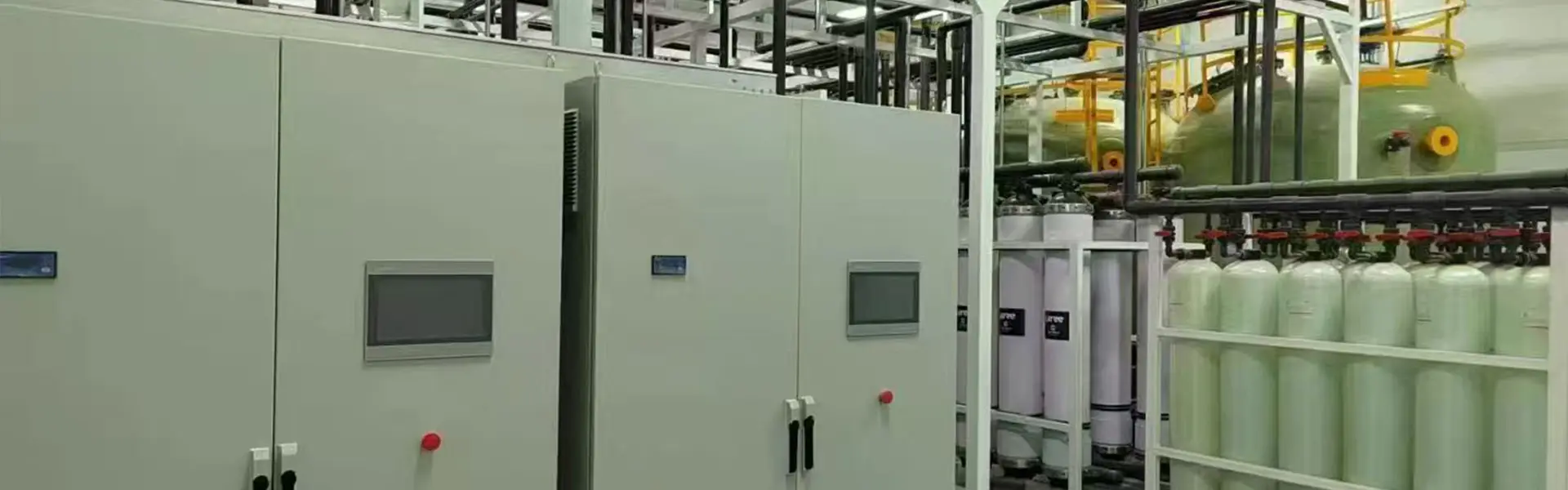
Why Is an Electroless Nickel Plating Line Becoming Essential for High-Performance Surface Finishing
Abstract: An Electroless Nickel Plating Line provides a highly controlled solution for depositing uniform nickel-phosphorus coatings on complex metal components, blind holes, recesses, and internal surfaces. Unlike conventional electrolytic nickel plating, the process uses an autocatalytic chemical reaction rather than an external electrical current, making it particularly valuable for applications requiring consistent coating thickness, corrosion resistance, hardness, and dimensional control. As a professional surface-treatment equipment manufacturer, JUNDA provides automated electroless nickel plating systems with PLC control, automatic chemical dosing, temperature regulation, and customized production-line engineering for industries including automotive, PCB, aerospace, oil & gas, medical, and precision manufacturing.
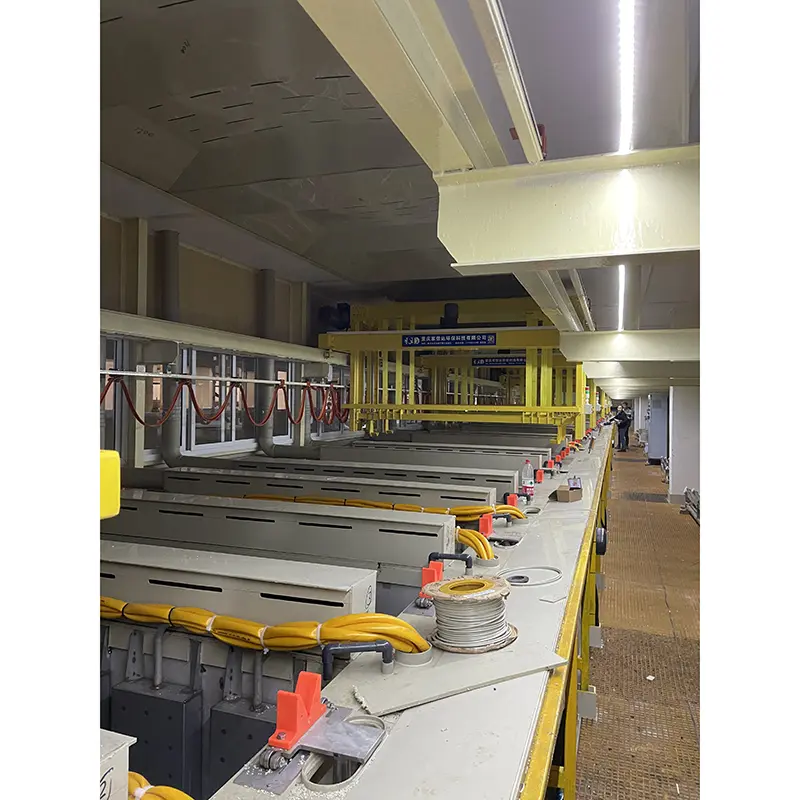
Table of Contents
- What Is an Electroless Nickel Plating Line?
- How Does the Electroless Nickel Plating Process Work?
- What Are the Key Technical Specifications?
- What Are the Main Advantages?
- How Does Electroless Nickel Compare with Electrolytic Nickel?
- How Should Phosphorus Content Be Selected?
- Where Is the Equipment Used?
- Why Does Automation Matter?
- How Should You Choose the Right Plating Line?
- Frequently Asked Questions
- Conclusion
What Is an Electroless Nickel Plating Line?
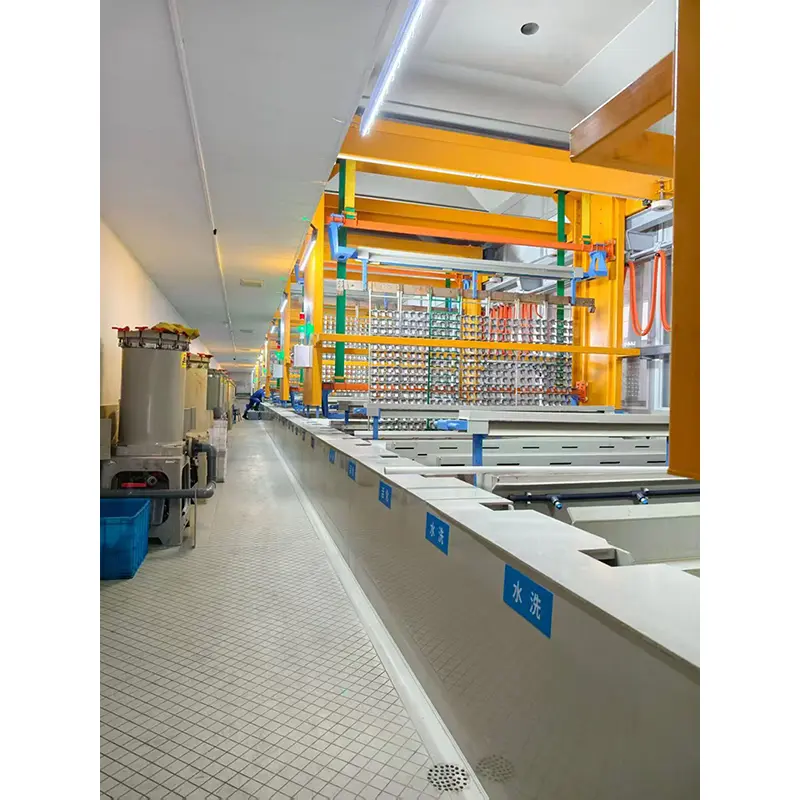
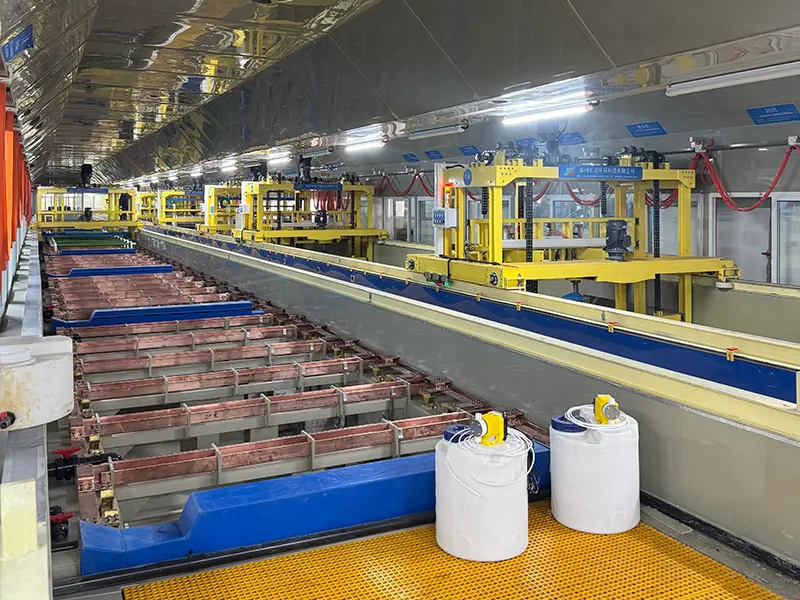
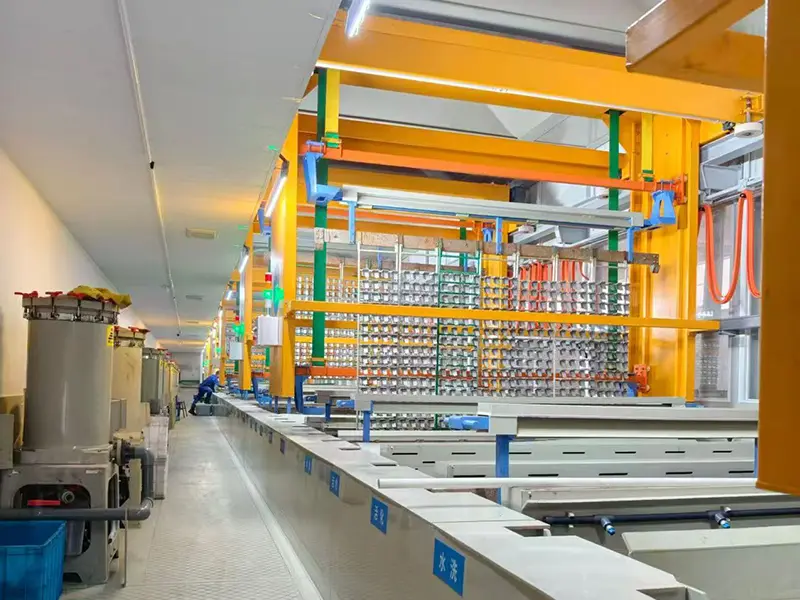
An Electroless Nickel Plating Line is an automated surface-treatment system designed to deposit a nickel-phosphorus alloy onto a workpiece through a controlled autocatalytic chemical reaction. Because the process does not rely on an external electrical current, nickel can be deposited more evenly across complicated geometries than with conventional electrolytic plating.
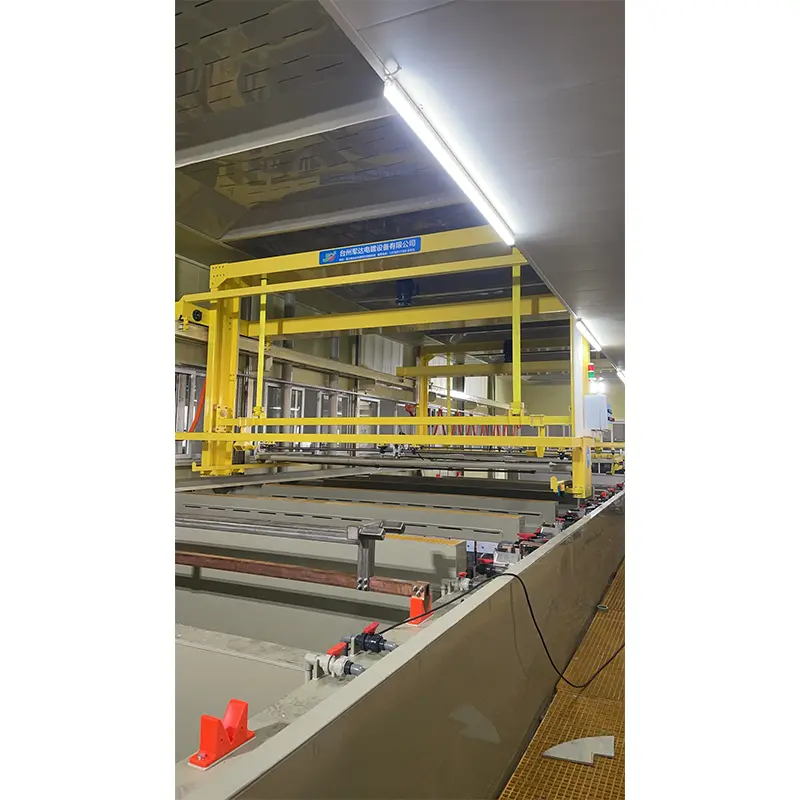
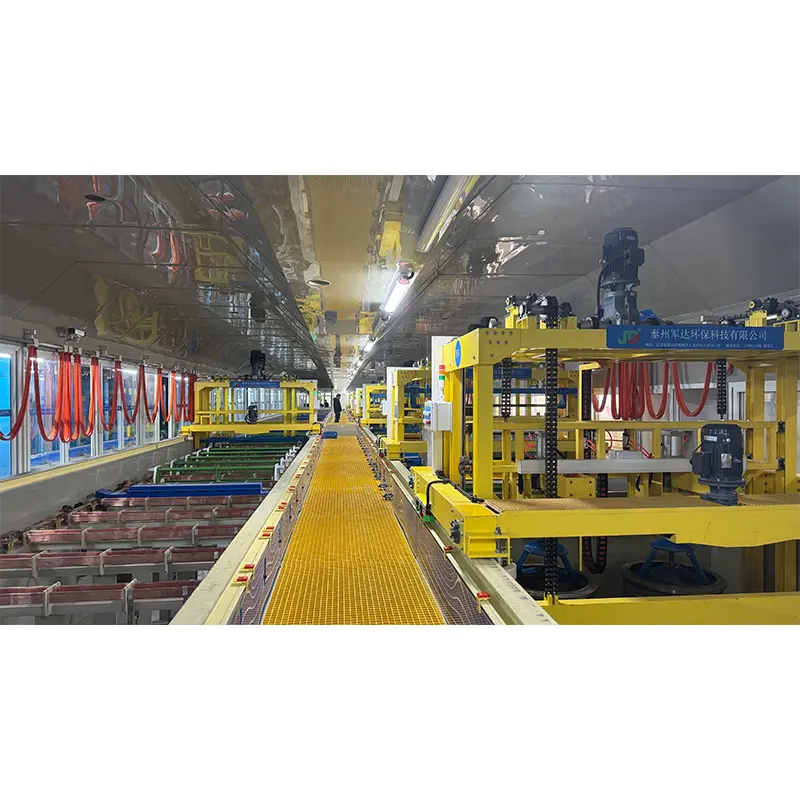
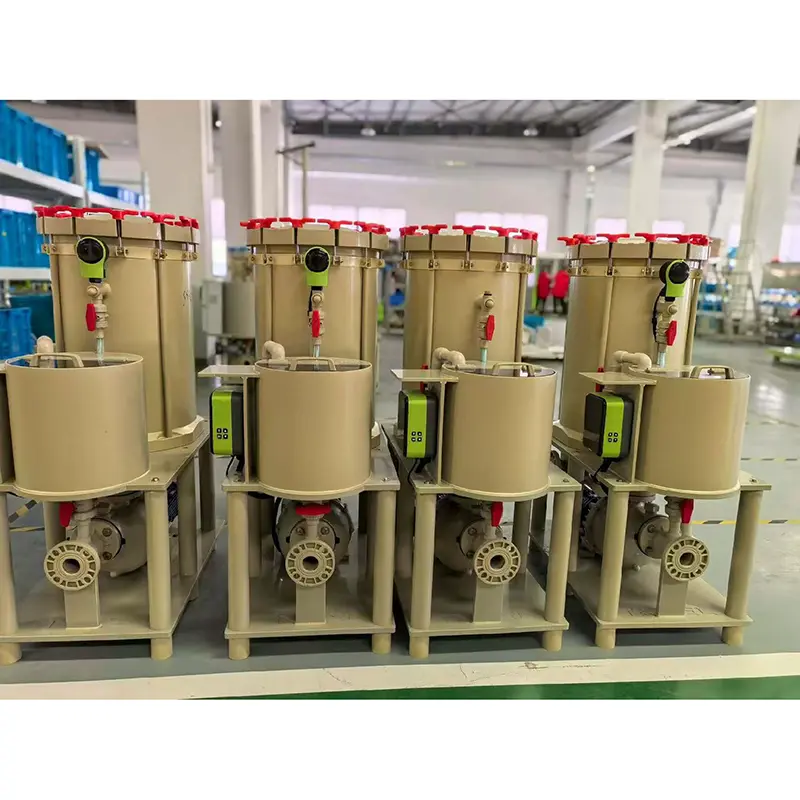
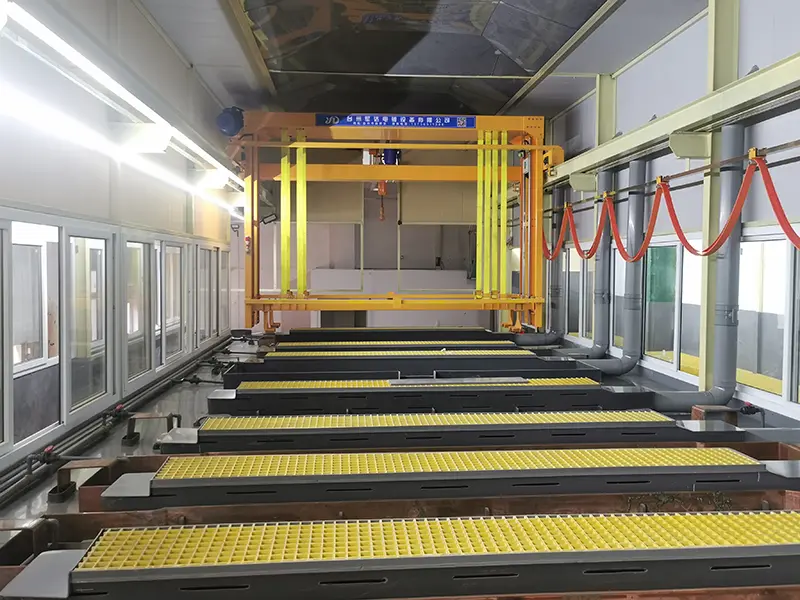
This characteristic makes electroless nickel particularly suitable for components containing blind holes, recessed areas, edges, cavities, and internal surfaces. JUNDA's system integrates automated chemical dosing, bath-temperature regulation, PLC-controlled material handling, and process management to improve production consistency and reduce manual intervention.
The system can also be engineered around different workpiece geometries, production volumes, factory layouts, and coating requirements. For manufacturers seeking a custom electroless nickel plating solution, process design should begin with the required coating properties and production objectives rather than equipment selection alone.
How Does the Electroless Nickel Plating Process Work?
The electroless nickel process relies on chemical reduction rather than direct electrical deposition. After suitable cleaning and surface activation, the workpiece enters the electroless nickel bath, where nickel ions are chemically reduced and deposited onto the activated surface.
A typical production workflow includes:
- Pre-cleaning: Removes oil, grease, dirt, and other contaminants.
- Surface preparation: Ensures adequate activation and adhesion.
- Electroless nickel deposition: Deposits the required Ni-P coating.
- Rinsing: Removes residual processing chemicals.
- Post-treatment: Provides additional protection or prepares the component for subsequent processing.
- Inspection: Checks coating thickness, appearance, hardness, and other quality requirements.
For industrial production, maintaining stable bath chemistry and temperature is critical. Automated dosing and PLC-based process management can help maintain repeatable processing conditions throughout extended production cycles.
What Are the Key Technical Specifications?
JUNDA's electroless nickel plating equipment is designed around controlled process parameters. The following specifications illustrate the core capabilities of the system:
| Parameter | Typical Specification | Production Significance |
|---|---|---|
| Plating Type | Electroless Nickel / Ni-P Alloy | Uniform chemical deposition |
| Phosphorus Content | 3–5%, 6–9%, or 10–13% | Balances hardness, corrosion resistance, and ductility |
| Bath Temperature | 85–92°C | Supports stable chemical deposition |
| pH Range | 4.5–5.2 | Helps maintain bath stability |
| Plating Rate | 10–20 μm/hour | Supports controlled coating build-up |
| Coating Uniformity | Approximately ±10% | Improves dimensional consistency |
| As-Plated Hardness | 500–600 HV | Provides useful wear resistance |
| Heat-Treated Hardness | Up to approximately 900–1000 HV | Suitable for demanding wear applications |
| Control System | PLC Controlled | Automates process sequences and handling |
| Heating | Quartz/Titanium Heater | Supports controlled bath temperature |
What Are the Main Advantages of an Electroless Nickel Plating Line?
The value of an automated electroless nickel production line goes beyond simply depositing nickel. It combines coating performance with process control and production automation.
Uniform Coating on Complex Geometries
Because deposition is not primarily governed by the distribution of electrical current, electroless nickel can provide highly consistent coverage across edges, recesses, blind holes, and internal surfaces. This is particularly important for precision components where uneven coating thickness can affect assembly or dimensional tolerances.
Excellent Corrosion Protection
Nickel-phosphorus coatings can provide strong resistance against corrosion. High-phosphorus formulations are especially useful where corrosion protection is a primary requirement, including certain chemical-processing and oil & gas applications.
Improved Wear Resistance
Electroless nickel provides a hard protective layer. Depending on the phosphorus content and post-treatment, heat treatment can significantly increase coating hardness, making the technology useful for components exposed to friction and mechanical wear.
Reduced Manual Intervention
PLC-controlled transfer systems and automated chemical dosing reduce the need for operators to manually manage every process step. This can improve repeatability while helping manufacturers manage labor requirements more efficiently.
Potential for Non-Conductive Substrates
With appropriate surface activation, electroless nickel can also be deposited onto selected non-conductive materials such as plastics and ceramics. This expands the range of components that can benefit from nickel-based surface protection.
How Does Electroless Nickel Compare with Electrolytic Nickel?
| Comparison Factor | Electroless Nickel | Electrolytic Nickel |
|---|---|---|
| Deposition Method | Autocatalytic chemical reaction | Electrical current |
| Coating Uniformity | Highly uniform | Can vary according to current distribution |
| Blind Holes | Excellent coverage potential | Limited coverage |
| Internal Surfaces | Suitable | More difficult to plate uniformly |
| Non-Conductive Materials | Possible after activation | Requires a conductive surface |
| Hardness | Approximately 500–600 HV as plated | Generally lower |
| Complex Components | Highly suitable | May require additional process optimization |
For applications where coating uniformity and internal-surface coverage are more important than purely decorative finishing, an electroless nickel system can provide a significant process advantage.
How Should Phosphorus Content Be Selected?
Phosphorus content is one of the most important variables in electroless nickel coating design. Different formulations provide different combinations of hardness, corrosion resistance, ductility, and application performance.
- Low phosphorus, 3–5%: Offers high hardness and is suitable for wear-oriented applications.
- Medium phosphorus, 6–9%: Provides a balanced combination of hardness and corrosion resistance for general industrial applications.
- High phosphorus, 10–13%: Prioritizes corrosion resistance and ductility and is particularly relevant to demanding chemical and oil & gas environments.
Therefore, phosphorus selection should be based on the actual operating environment rather than choosing the highest or lowest content by default.
Where Is the Equipment Used?
Because of its uniform deposition characteristics and corrosion-resistant coating performance, electroless nickel technology is used across multiple high-value industries.
- PCB manufacturing: Used as part of ENIG surface finishing processes.
- Oil & gas: Suitable for valves, fittings, and components exposed to corrosive environments.
- Aerospace: Supports surface protection and dimensional requirements for precision components.
- Automotive: Used for fuel-system and precision mechanical components.
- Medical equipment: Provides engineered surface properties for selected components.
- Molds and dies: Helps improve surface hardness and wear resistance.
- Precision machinery: Useful for components requiring controlled coating thickness.
- Textile machinery: Provides protection for components exposed to mechanical wear.
Why Does Automation Matter in Modern Nickel Plating?
Manual plating operations can introduce variations in transfer timing, chemical replenishment, bath temperature, and processing sequences. For high-volume industrial manufacturing, these variations can directly affect coating quality.
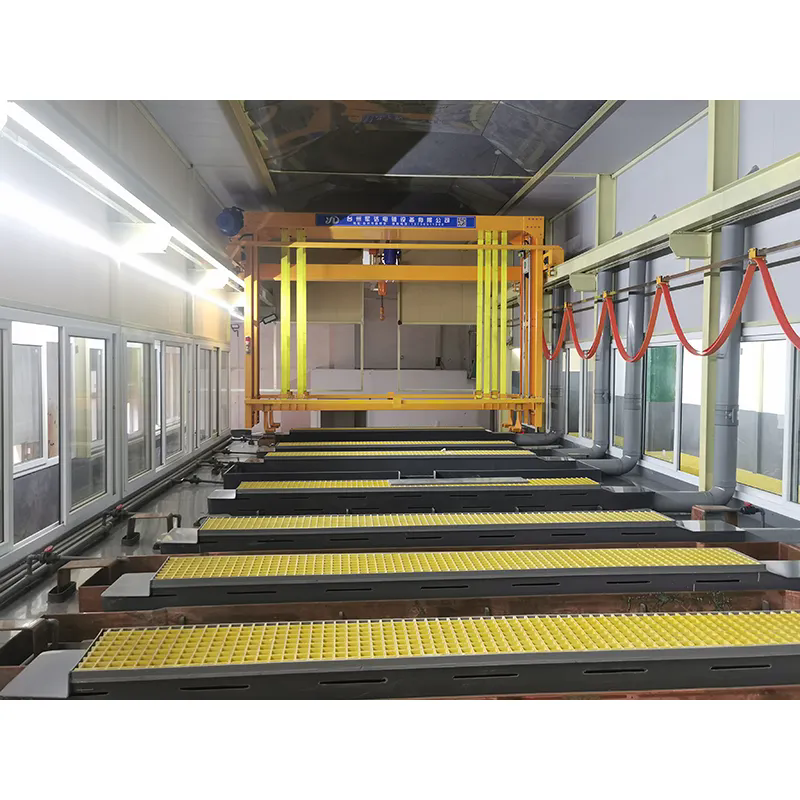
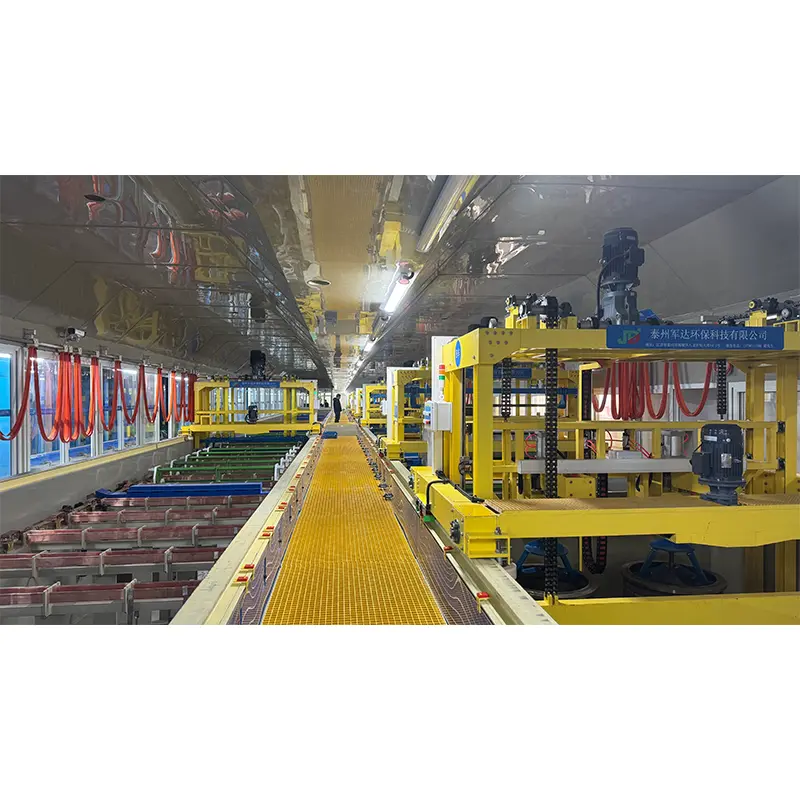
An automated plating line addresses these challenges by coordinating key operations through programmable control. JUNDA's surface-treatment equipment uses PLC-based automation, automatic chemical dosing, controlled temperature management, and automated workpiece handling.
The result is a more repeatable production environment with less dependence on manual process intervention. Automated systems can also be customized around production capacity, part geometry, tank configuration, and factory layout.
How Should You Choose the Right Electroless Nickel Plating Line?
Choosing equipment should begin with the coating specification and production requirements. Before requesting a quotation from a China manufacturer or supplier, buyers should define several critical parameters.
- Workpiece dimensions: Identify maximum and minimum component sizes.
- Material: Specify steel, aluminum, copper alloy, plastic, ceramic, or other substrate materials.
- Required coating thickness: Define the target thickness and acceptable tolerance.
- Production capacity: Estimate hourly, daily, and annual production requirements.
- Surface requirements: Consider corrosion resistance, hardness, wear resistance, and appearance.
- Phosphorus formulation: Select low-, medium-, or high-phosphorus chemistry according to application needs.
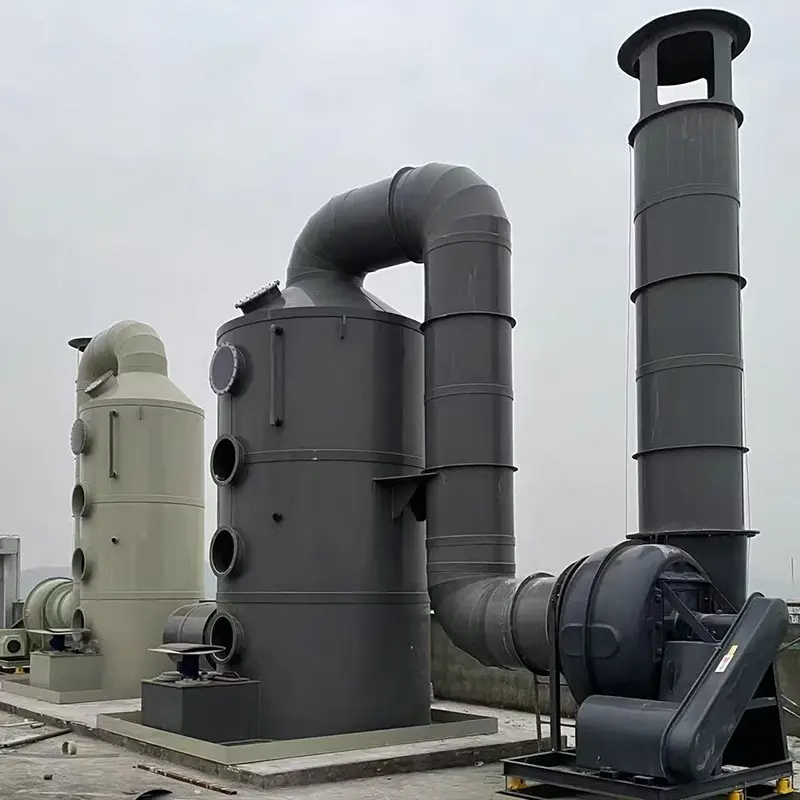
- Factory conditions: Evaluate available floor space, utilities, ventilation, wastewater treatment, and material flow.
- Automation level: Determine whether the project requires semi-automatic or fully automatic handling.
A qualified equipment manufacturer should be able to evaluate these factors and develop a process-oriented solution instead of supplying a generic machine.
Frequently Asked Questions
What is an Electroless Nickel Plating Line?
An Electroless Nickel Plating Line is an automated chemical surface-treatment system that deposits a nickel-phosphorus alloy without relying on external electrical current. It is designed for uniform coating of complex components and internal surfaces.
What temperature is normally used for electroless nickel plating?
The JUNDA system specifies an operating bath temperature of approximately 85–92°C. Actual operating conditions should be determined according to the selected chemical formulation and process requirements.
Can electroless nickel plating cover blind holes?
Yes. One of the major advantages of electroless nickel deposition is its ability to provide more uniform coverage on blind holes, recesses, and internal surfaces where conventional electrolytic plating may have difficulty achieving consistent deposition.
What phosphorus content should I choose?
Low-phosphorus coatings generally emphasize hardness, medium-phosphorus coatings provide a balanced performance profile, and high-phosphorus coatings are typically selected when corrosion resistance and ductility are priorities.
Can the plating line be customized?
Yes. A production line can be engineered according to component geometry, production capacity, factory layout, process sequence, automation requirements, tank configuration, and environmental-treatment needs. JUNDA provides customized surface-treatment equipment and turnkey engineering services.
What industries can benefit from electroless nickel plating?
Common applications include PCB manufacturing, aerospace, automotive, oil & gas, medical equipment, molds and dies, textile machinery, and precision mechanical manufacturing.
Conclusion
An Electroless Nickel Plating Line is more than a chemical coating system—it is an integrated production solution for manufacturers that require uniform nickel-phosphorus deposition, reliable corrosion protection, controlled hardness, and consistent processing of complex components. With automated dosing, temperature control, PLC operation, and customized material-handling systems, the technology can help modern factories improve coating consistency while reducing dependence on manual operations.
For manufacturers planning a new surface-treatment facility or upgrading an existing production line, selecting the right equipment partner is equally important as selecting the right plating chemistry. With experience in automated electroplating and surface-treatment equipment, JUNDA can provide process design, equipment manufacturing, installation, commissioning, and technical support for customized projects. If you are looking for a reliable China manufacturer and supplier for an automated electroless nickel solution, contact us today to discuss your workpiece requirements, production capacity, coating specifications, and factory layout.
Related News
- How Can a Low-Rail Gantry Barrel Zinc Plating Line Improve High-Volume Metal Finishing
- How Does a Zinc Rack Plating Line Improve Metal Surface Protection and Production Efficiency?
- How Does a Gantry Rack Plating Line Improve Electroplating Efficiency and Product Quality?
- How Does a Vertical Hoist Plating Line Improve Electroplating Efficiency and Quality?
- How Does a Gantry Rack Plating Line Improve Industrial Electroplating Efficiency?
- How Does a Gantry Barrel Plating Line Improve Electroplating Efficiency and Quality?
Leave me a message