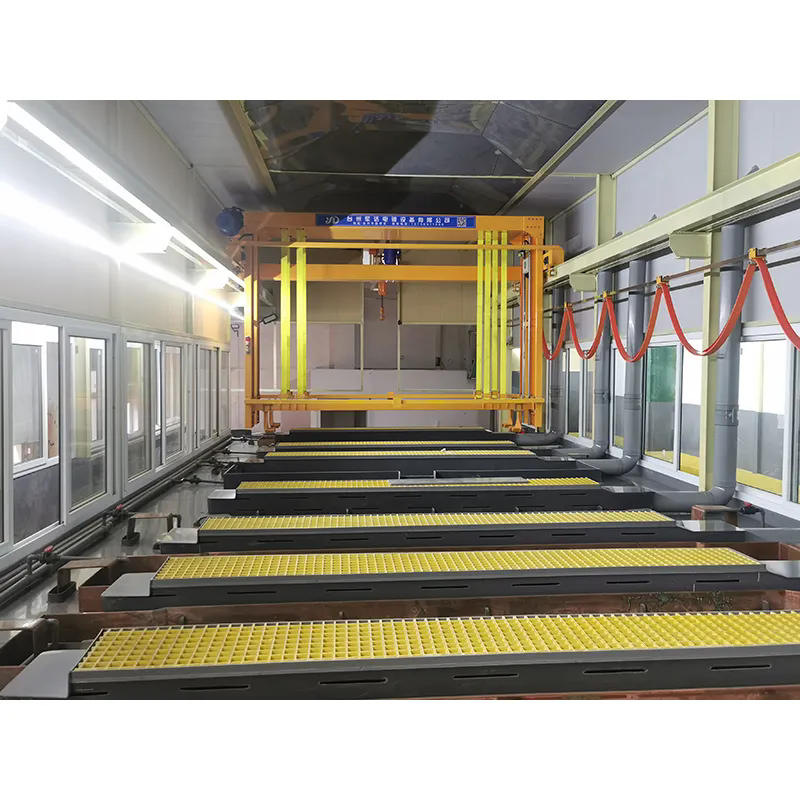
How Does a Zinc Rack Plating Line Improve Metal Surface Protection and Production Efficiency?
Article Summary
A zinc rack plating line is an advanced electroplating solution designed to provide durable corrosion resistance, stable coating quality, and efficient production capabilities for various metal components. With increasing requirements for surface protection in automotive, hardware, electrical, and industrial manufacturing industries, choosing the right plating system has become essential for improving product reliability and reducing long-term maintenance costs.
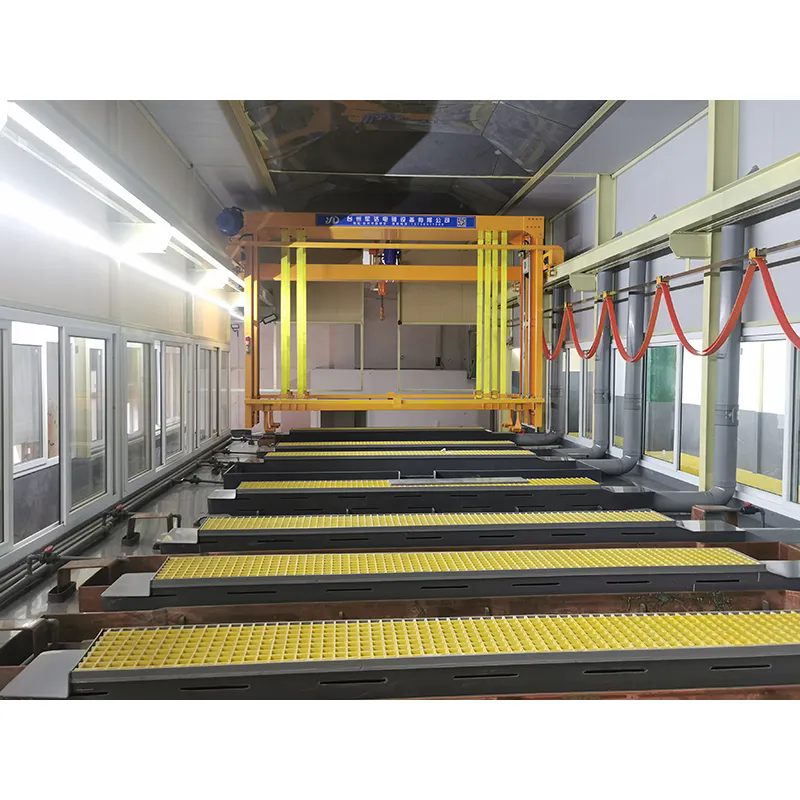
This article explains how a zinc rack plating line works, why manufacturers need it, what challenges it solves, and how modern automated systems help companies achieve consistent zinc coating results. It also introduces the advantages of solutions provided by Taizhou Junda Intelligent Equipment Co., Ltd. and offers practical guidance for selecting an appropriate plating system.
Table of Contents
- What Is a Zinc Rack Plating Line?
- How Does a Zinc Rack Plating Line Work?
- What Problems Can a Zinc Rack Plating Line Solve?
- What Are the Main Components of a Zinc Rack Plating Line?
- Manual Plating vs Automated Zinc Rack Plating Line
- How to Choose the Right Zinc Rack Plating Line?
- Maintenance Tips for Better Plating Performance
- Frequently Asked Questions
What Is a Zinc Rack Plating Line?
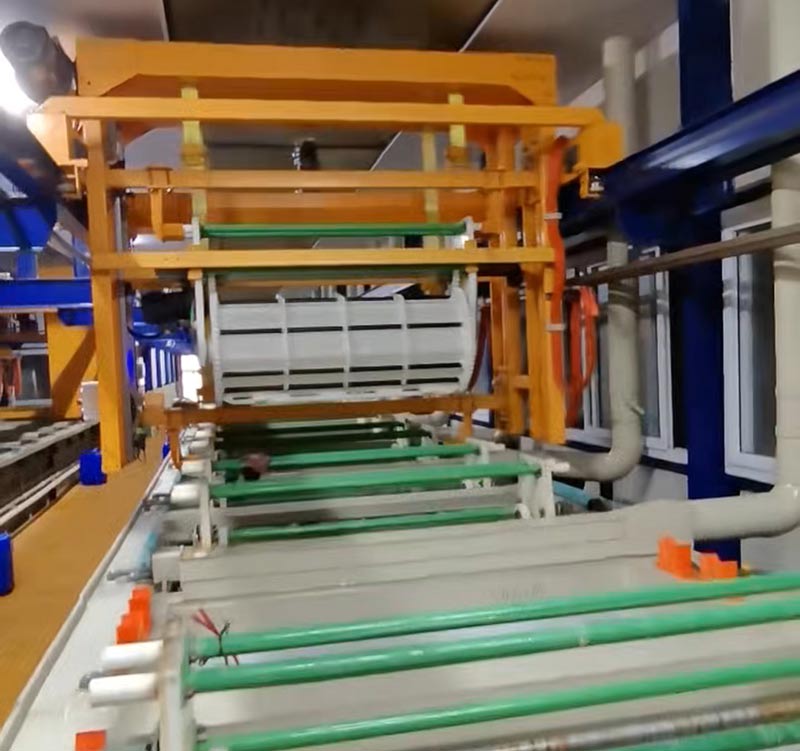
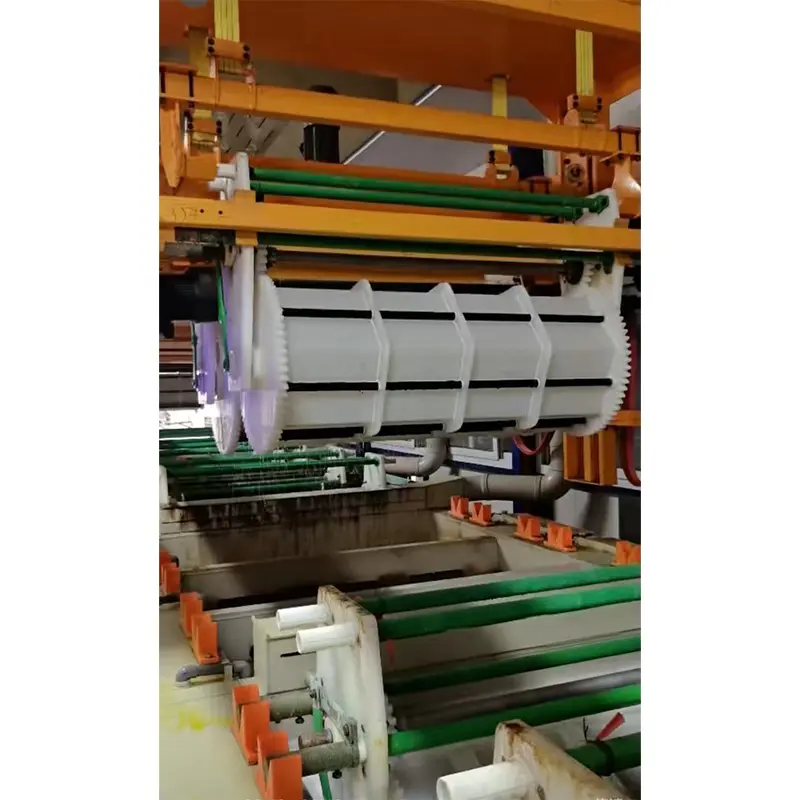
A zinc rack plating line is an industrial electroplating system that uses racks or fixtures to hold metal workpieces during the zinc coating process. Unlike barrel plating, which is mainly used for small loose parts, rack plating is suitable for larger, delicate, or precision components that require controlled positioning and high-quality surface finishing.
The primary purpose of zinc plating is to create a protective zinc layer on steel or iron surfaces. This zinc coating acts as a barrier against moisture, oxidation, and environmental corrosion, extending the service life of metal products.
Modern manufacturing industries require plating systems that provide high consistency, lower labor requirements, and better environmental control. An automated zinc rack plating line helps manufacturers achieve these goals through precise process management and intelligent operation.
Taizhou Junda Intelligent Equipment Co., Ltd. focuses on developing intelligent electroplating equipment that supports manufacturers with reliable, efficient, and customized zinc plating solutions for different industrial applications.
How Does a Zinc Rack Plating Line Work?
A zinc rack plating line completes multiple treatment stages in a controlled sequence. Each step plays an important role in ensuring strong adhesion, uniform thickness, and excellent corrosion resistance.
| Processing Stage | Main Function | Importance |
|---|---|---|
| Degreasing | Removes oil, grease, and surface contaminants | Improves coating adhesion |
| Water Rinsing | Cleans chemical residues | Prepares the surface for the next process |
| Pickling | Removes rust and oxide layers | Creates a clean metal surface |
| Zinc Electroplating | Deposits a protective zinc layer | Provides corrosion resistance |
| Passivation | Improves surface protection and appearance | Enhances durability |
| Drying | Removes moisture from finished parts | Ensures stable product quality |
During operation, metal parts are mounted onto racks and transported automatically or semi-automatically through different processing tanks. Electrical current causes zinc ions in the electrolyte solution to deposit evenly onto the surface of the workpieces.
The automation level, chemical control system, temperature management, and transportation accuracy directly influence final coating performance.
What Problems Can a Zinc Rack Plating Line Solve?
Manufacturers often face challenges such as inconsistent coating thickness, high labor costs, production delays, and unstable product quality. A properly designed zinc rack plating line can address these problems effectively.
- Improved coating consistency: Automated control systems maintain stable plating conditions and reduce human operation errors.
- Higher production efficiency: Continuous processing reduces waiting time and increases output capacity.
- Better product protection: Uniform zinc layers provide stronger resistance against corrosion and environmental damage.
- Reduced operating costs: Intelligent equipment reduces manual intervention and improves resource utilization.
- Flexible production capability: Adjustable parameters allow manufacturers to process different component sizes and materials.
For industries producing automotive parts, construction hardware, electrical components, and precision metal products, improving plating stability directly affects product competitiveness and customer satisfaction.
What Are the Main Components of a Zinc Rack Plating Line?
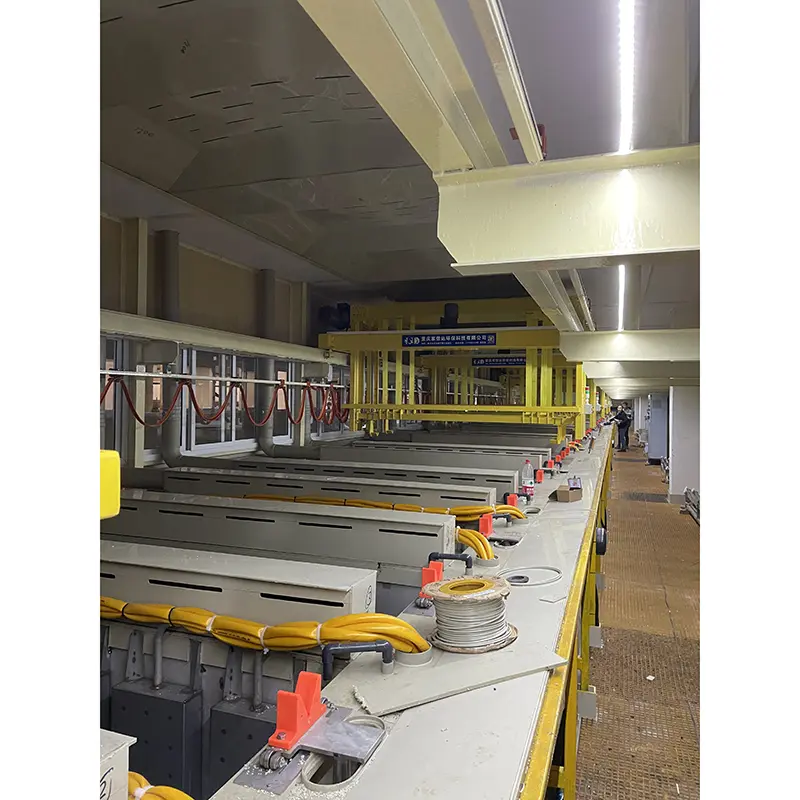
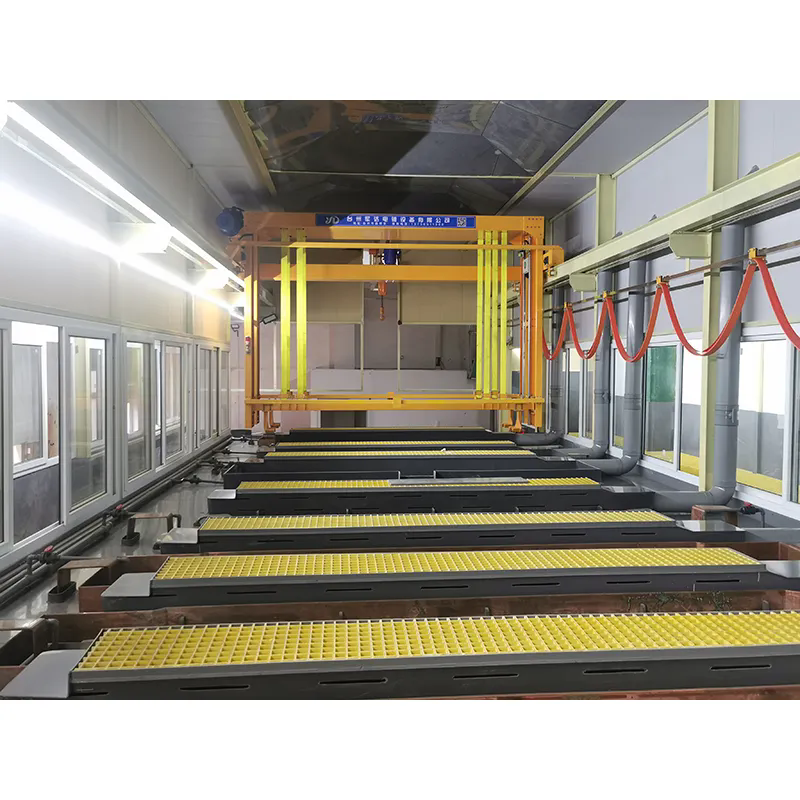
A complete zinc rack plating line consists of multiple systems working together. Understanding these components helps manufacturers evaluate equipment quality and production capability.
| Component | Function |
|---|---|
| Loading and Unloading System | Handles workpieces efficiently before and after plating |
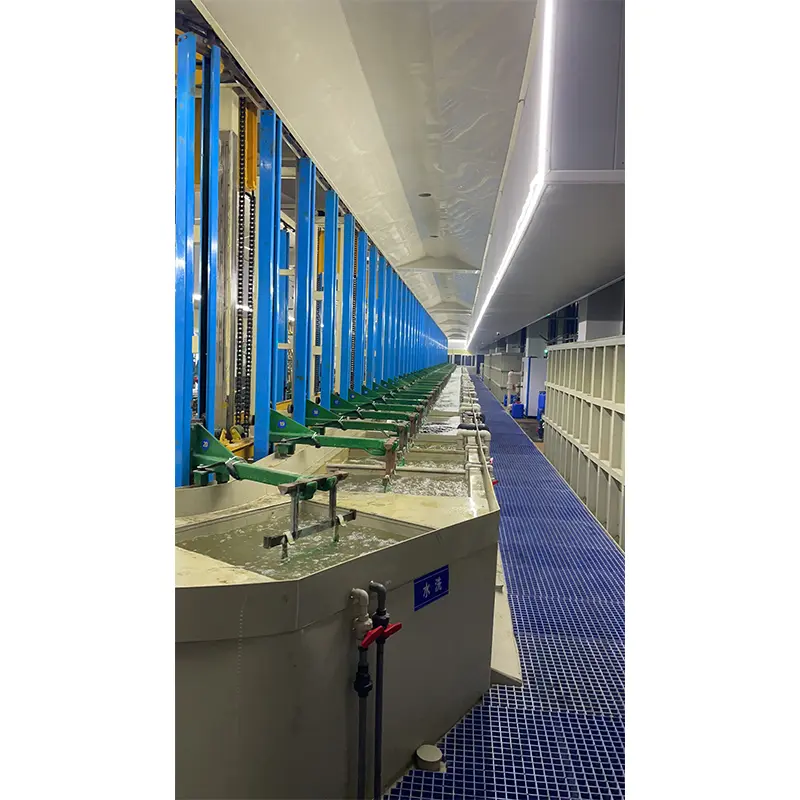
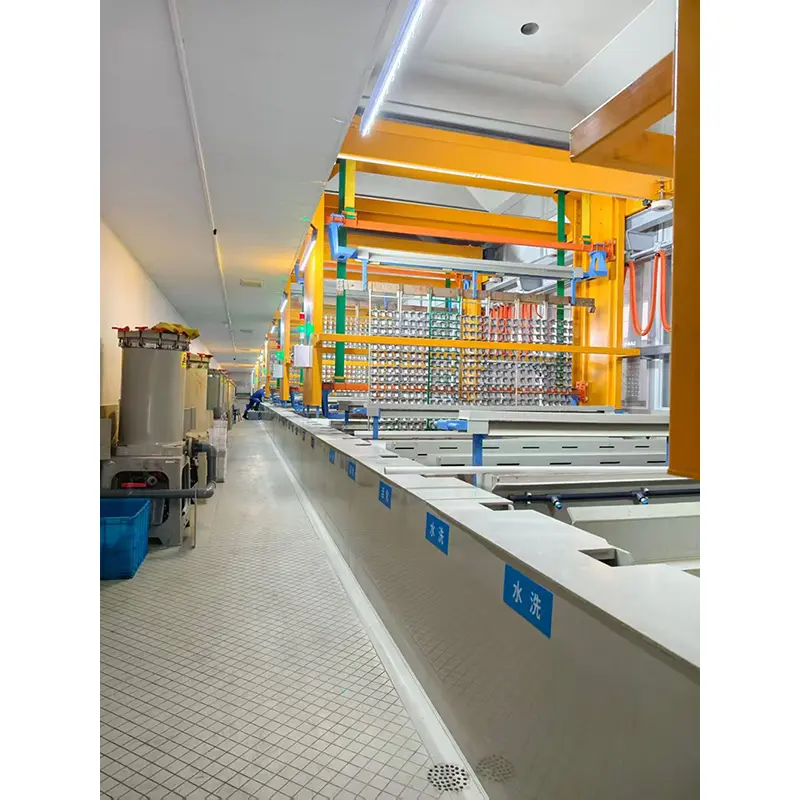
| Plating Tanks | Provide controlled chemical environments for surface treatment |
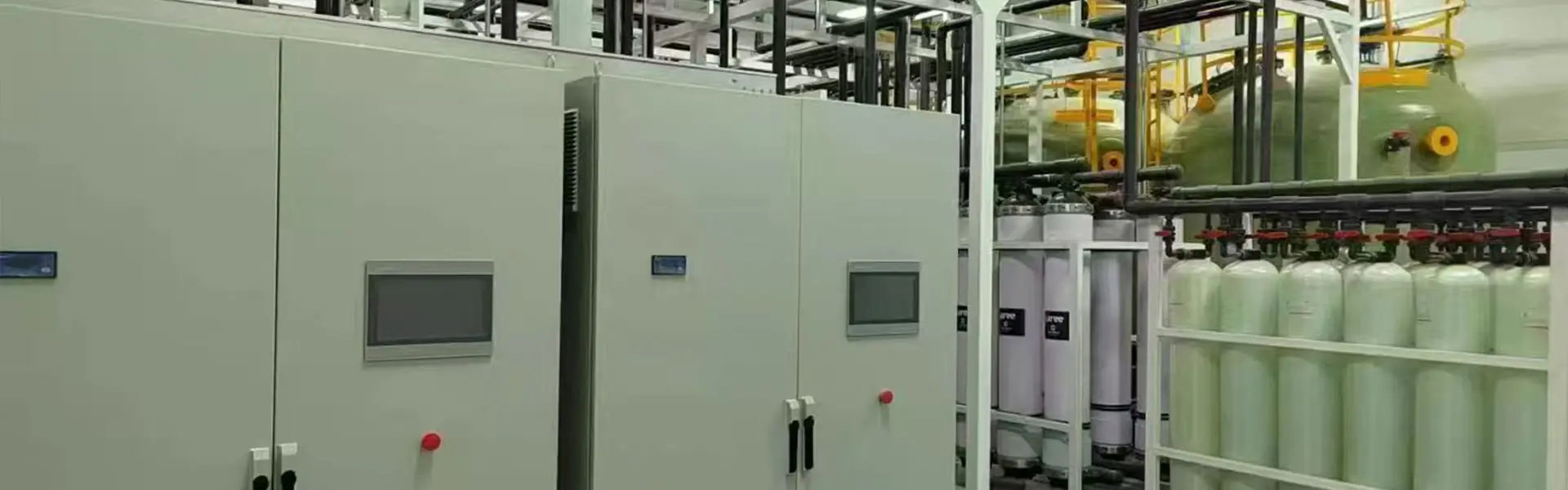
| Rectifier System | Supplies stable electrical current for zinc deposition |
| Automatic Transportation System | Moves racks between different processing stations |
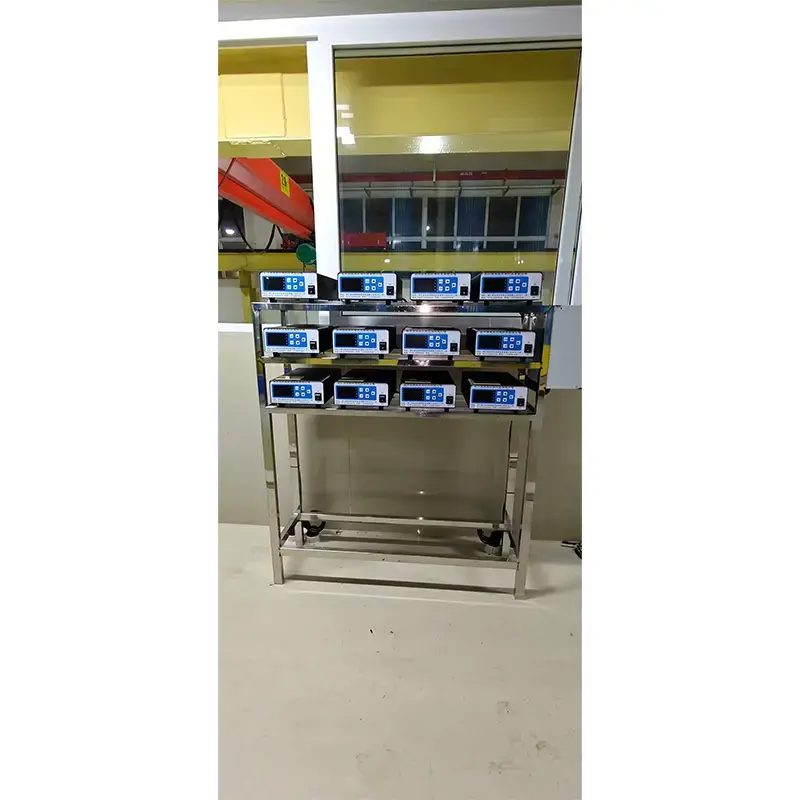
| Control System | Manages operation parameters and improves process accuracy |
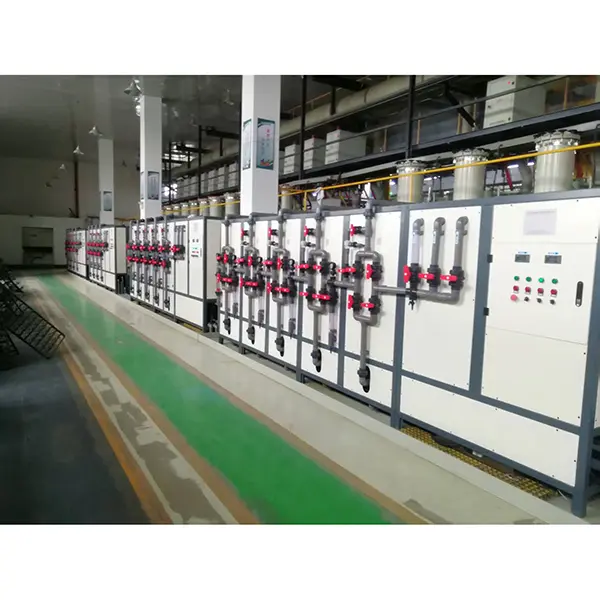
| Filtration System | Maintains solution cleanliness and plating quality |
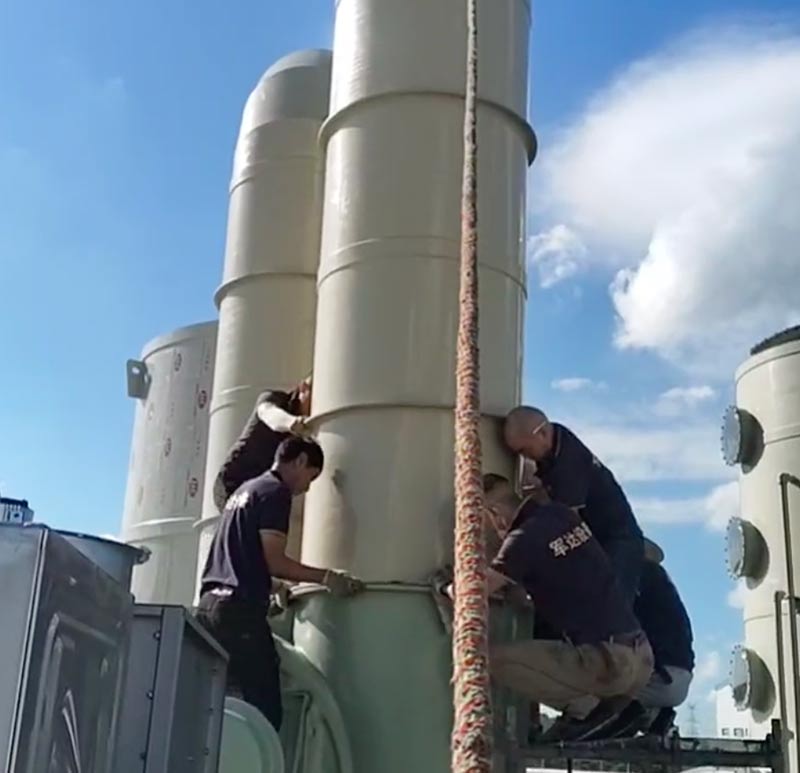
| Ventilation Equipment | Improves workplace safety and environmental management |
High-quality equipment design ensures that every processing stage works together smoothly. This helps manufacturers maintain stable production even when dealing with large-volume orders.
Manual Plating vs Automated Zinc Rack Plating Line
| Factor | Manual Plating | Automated Zinc Rack Plating Line |
|---|---|---|
| Production Speed | Limited by manual operation | Continuous and efficient processing |
| Coating Stability | Depends heavily on operator experience | Controlled by precise parameters |
| Labor Requirement | Requires more workers | Reduces manual workload |
| Quality Control | Difficult to maintain consistency | More stable and repeatable |
| Long-Term Cost | Higher operating expenses | Better production economy |
For manufacturers seeking long-term growth, automated plating systems provide advantages in quality management, production planning, and cost control.
How to Choose the Right Zinc Rack Plating Line?
Selecting suitable plating equipment requires careful consideration of production requirements, product characteristics, and future expansion plans.
- Analyze product specifications: Consider part size, material type, weight, and required coating thickness.
- Evaluate production capacity: Choose equipment that matches current output requirements while allowing future growth.
- Check automation features: Intelligent controls can improve efficiency and reduce operation risks.
- Consider environmental requirements: Proper chemical management and ventilation systems help maintain safe production conditions.
- Select an experienced supplier: Professional manufacturers can provide customized designs and technical support.
Taizhou Junda Intelligent Equipment Co., Ltd. provides customized zinc rack plating line solutions based on different production environments and customer requirements. Professional equipment design helps manufacturers improve productivity while maintaining stable plating quality.
Maintenance Tips for Better Plating Performance
Regular maintenance is essential for keeping a zinc rack plating line operating efficiently. Proper management can extend equipment lifespan and reduce unexpected downtime.
- Monitor chemical concentration regularly to maintain stable plating conditions.
- Clean plating tanks and filtration systems to prevent contamination.
- Inspect electrical connections and rectifier performance.
- Check rack fixtures to ensure stable workpiece positioning.
- Maintain transportation systems to prevent mechanical failures.
- Record operating data to identify potential production issues.
A preventive maintenance strategy allows manufacturers to maintain consistent production quality and avoid costly interruptions.
Frequently Asked Questions
Q1: What materials can be processed by a zinc rack plating line?
A zinc rack plating line is mainly used for steel and iron components. It is widely applied for automotive parts, hardware products, electrical components, and industrial metal products that require corrosion protection.
Q2: Why is rack plating preferred for larger components?
Rack plating provides stable positioning and prevents collision between parts. It is suitable for products requiring better appearance, precise coating thickness, and controlled surface quality.
Q3: How can manufacturers improve zinc plating quality?
Manufacturers can improve quality by maintaining proper chemical balance, controlling temperature, using reliable equipment, and selecting a plating system designed for their production needs.
Q4: Is an automated zinc rack plating line suitable for small factories?
Yes. Different automation levels can be designed according to production volume and investment requirements. A customized solution helps small and medium manufacturers improve efficiency without unnecessary costs.
Q5: Why choose Taizhou Junda Intelligent Equipment Co., Ltd.?
Taizhou Junda Intelligent Equipment Co., Ltd. provides intelligent electroplating equipment solutions focused on reliability, efficiency, and customized production requirements. The company helps customers achieve stable zinc coating performance through professional equipment design and manufacturing experience.
Conclusion
A zinc rack plating line plays an important role in modern metal surface treatment by improving corrosion resistance, production efficiency, and product consistency. Compared with traditional manual processes, automated plating solutions provide better control, higher productivity, and more reliable results.
For manufacturers looking to upgrade their surface treatment capabilities, choosing the right equipment supplier is essential. With professional technology and customized solutions, Taizhou Junda Intelligent Equipment Co., Ltd. helps businesses build efficient zinc plating systems that meet demanding industrial requirements. If you need a reliable zinc rack plating solution tailored to your production needs, please contact us.
Related News
- How Can an Electroless Nickel Plating Line Improve Coating Uniformity, Corrosion Resistance, and Production Efficiency
- How Can a Low-Rail Gantry Barrel Zinc Plating Line Improve High-Volume Metal Finishing
- Why Is an Electroless Nickel Plating Line Becoming Essential for High-Performance Surface Finishing
- How Does a Gantry Rack Plating Line Improve Electroplating Efficiency and Product Quality?
- How Does a Vertical Hoist Plating Line Improve Electroplating Efficiency and Quality?
- How Does a Gantry Rack Plating Line Improve Industrial Electroplating Efficiency?
Leave me a message
New Products

News Recommendations