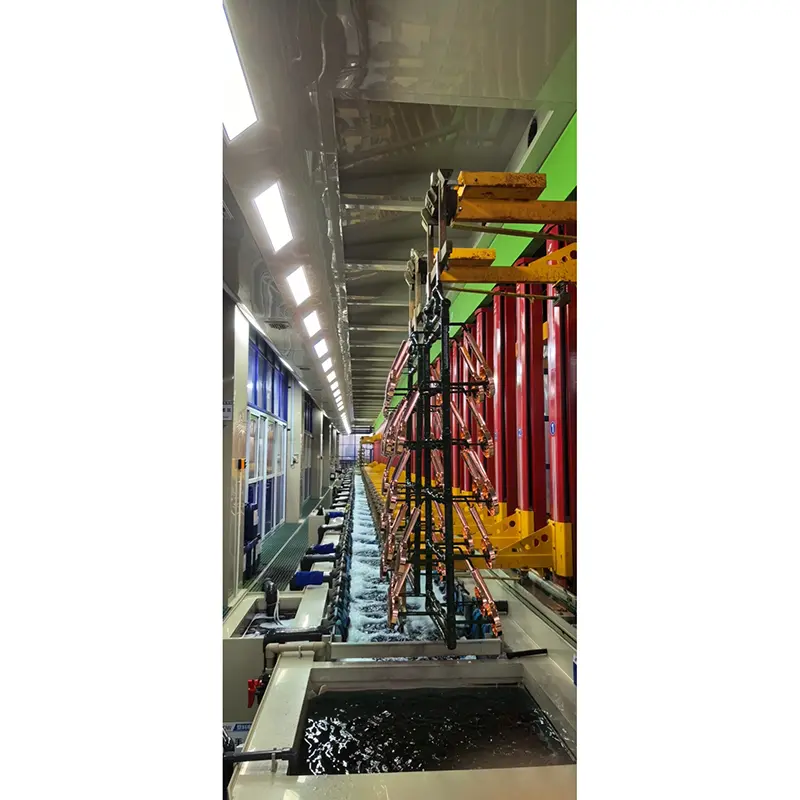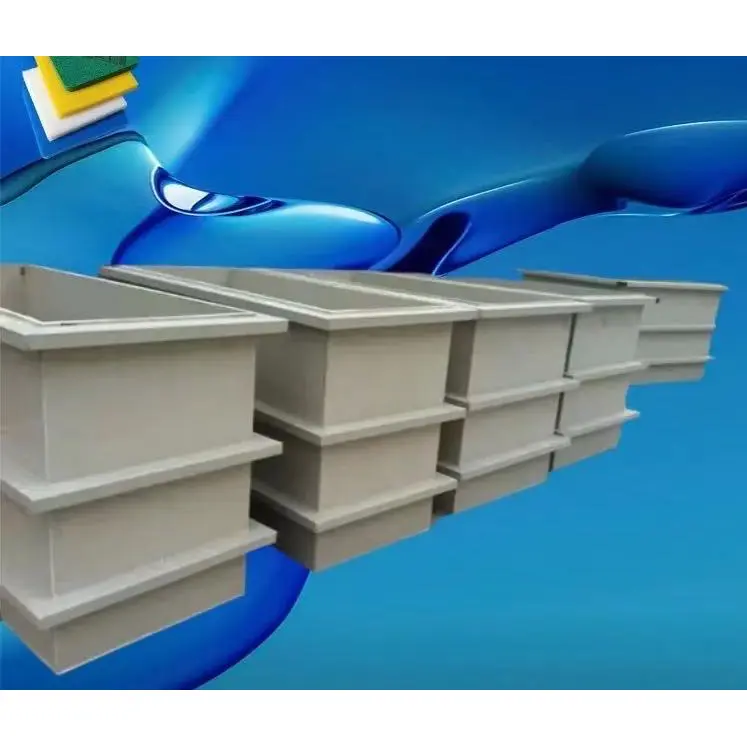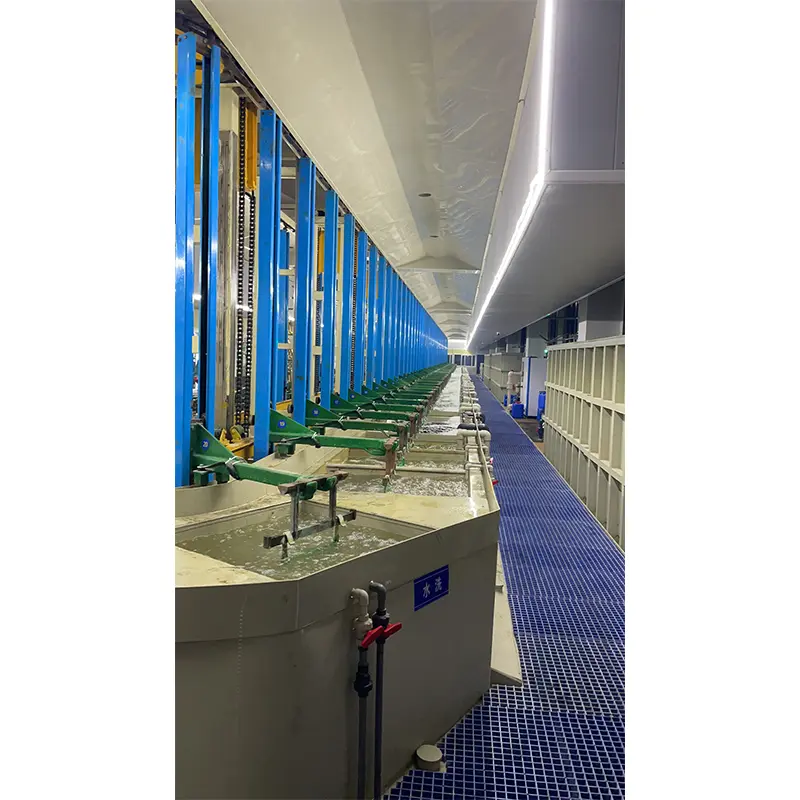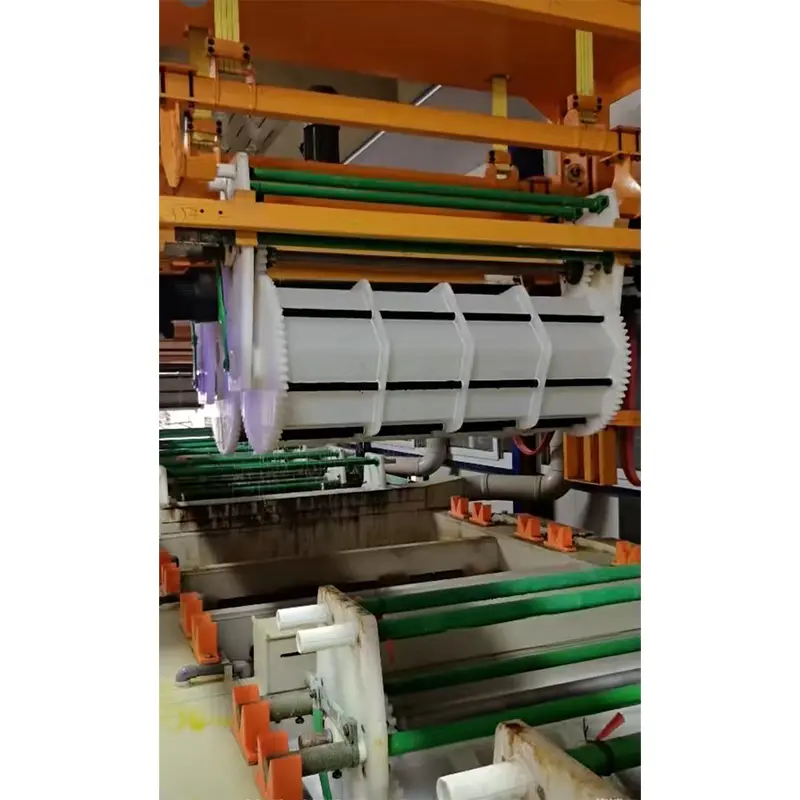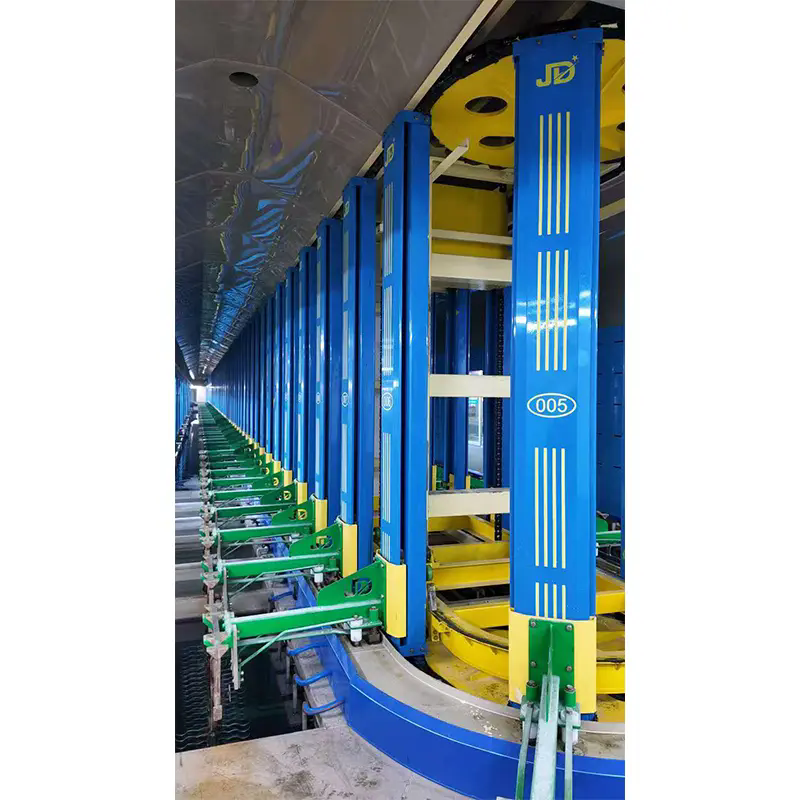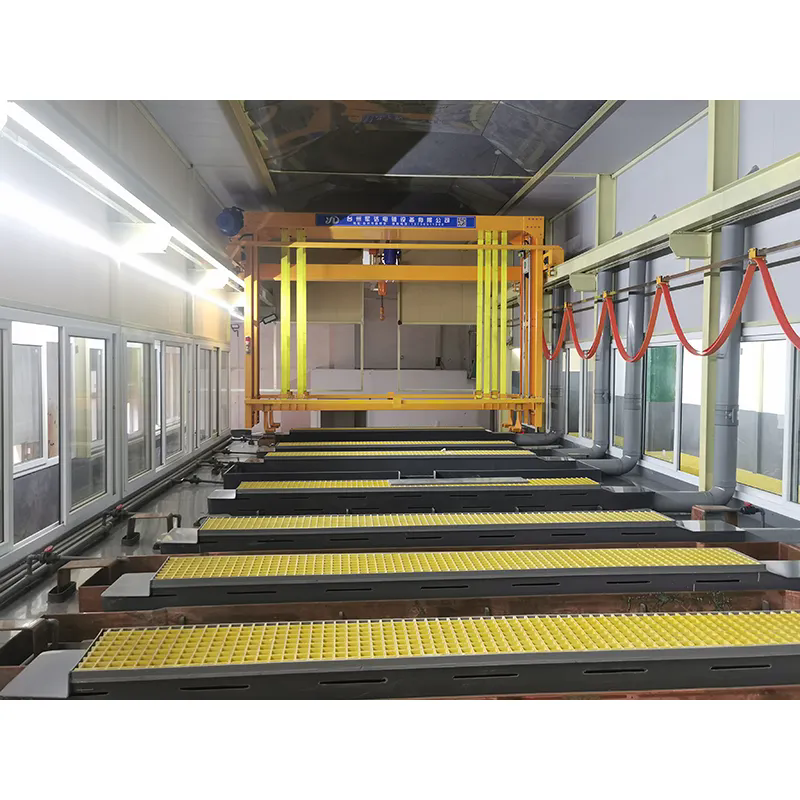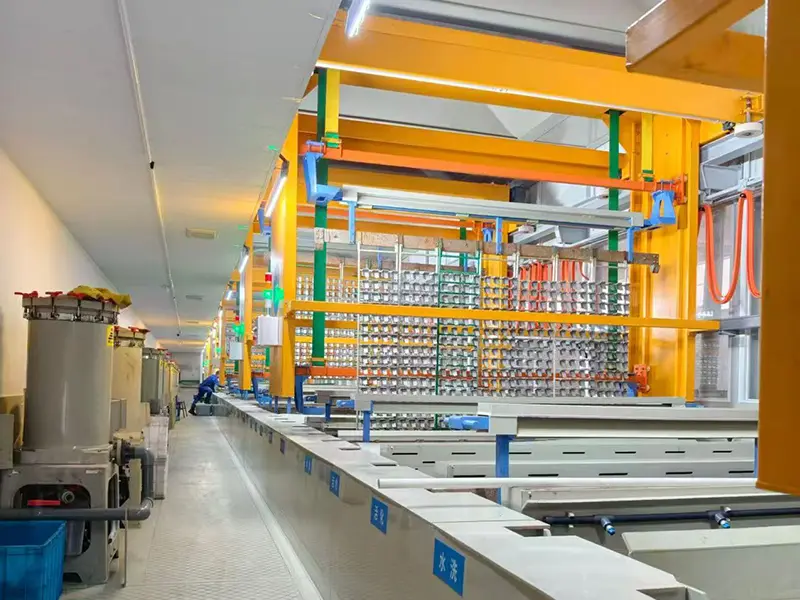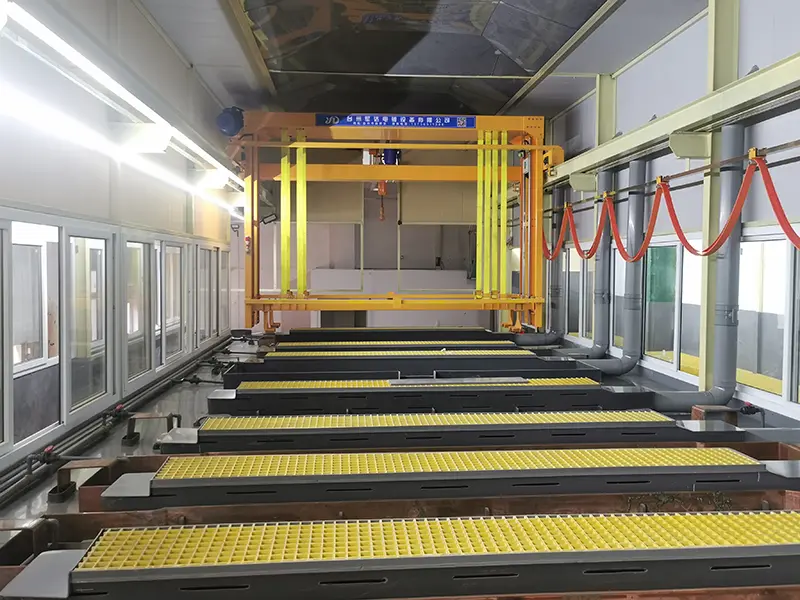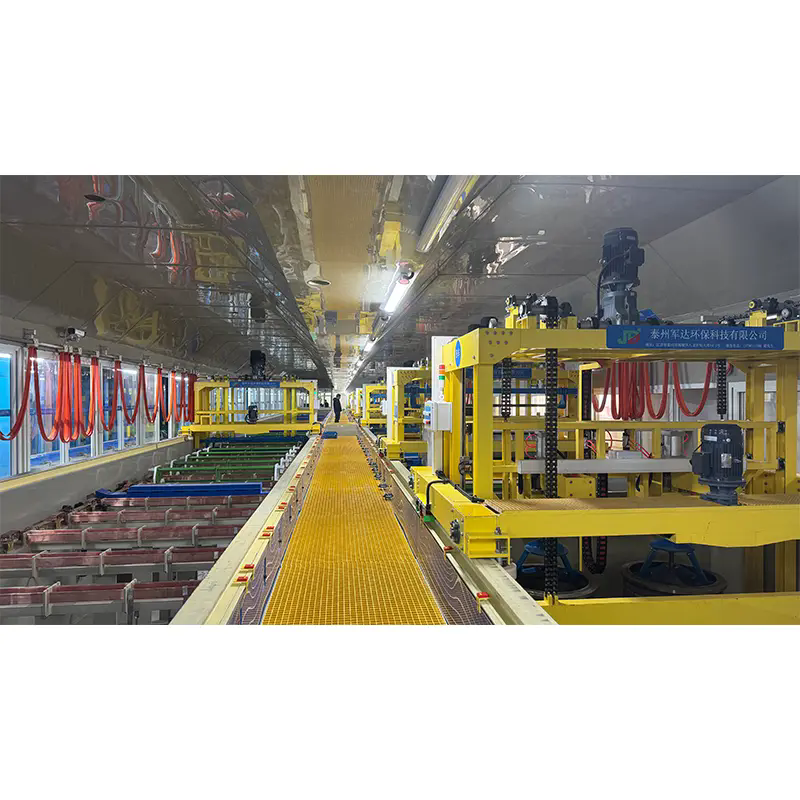
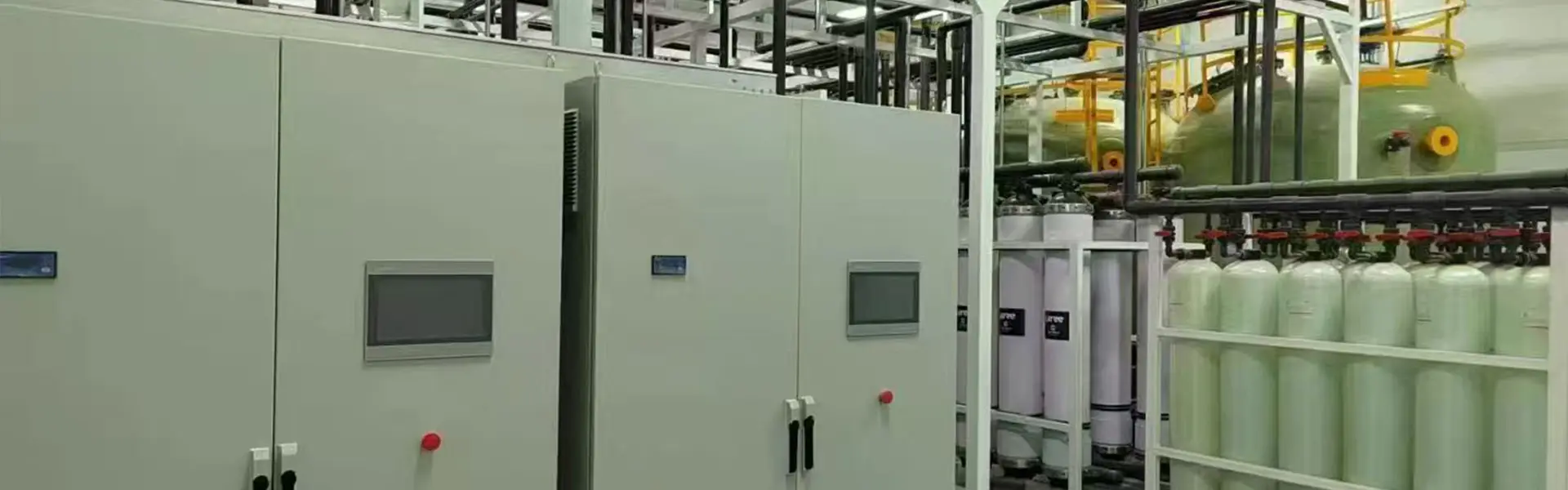
Electroless nickel plating is widely used when manufacturers need consistent coating thickness, corrosion protection, wear resistance, and reliable coverage on complex components. JUNDA develops automated surface-finishing equipment designed for controlled nickel-phosphorus deposition, including PLC operation, automatic chemical dosing, temperature regulation, and gantry handling. Its system is suitable for applications involving blind holes, internal surfaces, precision parts, and demanding industrial environments.
An electroless nickel process deposits a nickel-phosphorus alloy through an autocatalytic chemical reaction rather than an external electrical current. This makes it particularly useful for complex geometries where conventional electrolytic plating can produce uneven current distribution. A properly engineered production line integrates pretreatment, rinsing, chemical nickel deposition, temperature and pH control, filtration, handling, and post-treatment into a repeatable workflow. JUNDA's automated solution is designed around these requirements, with operating parameters including an 85–92°C bath temperature, 4.5–5.2 pH range, and a typical plating rate of 10–20 μm/hour.
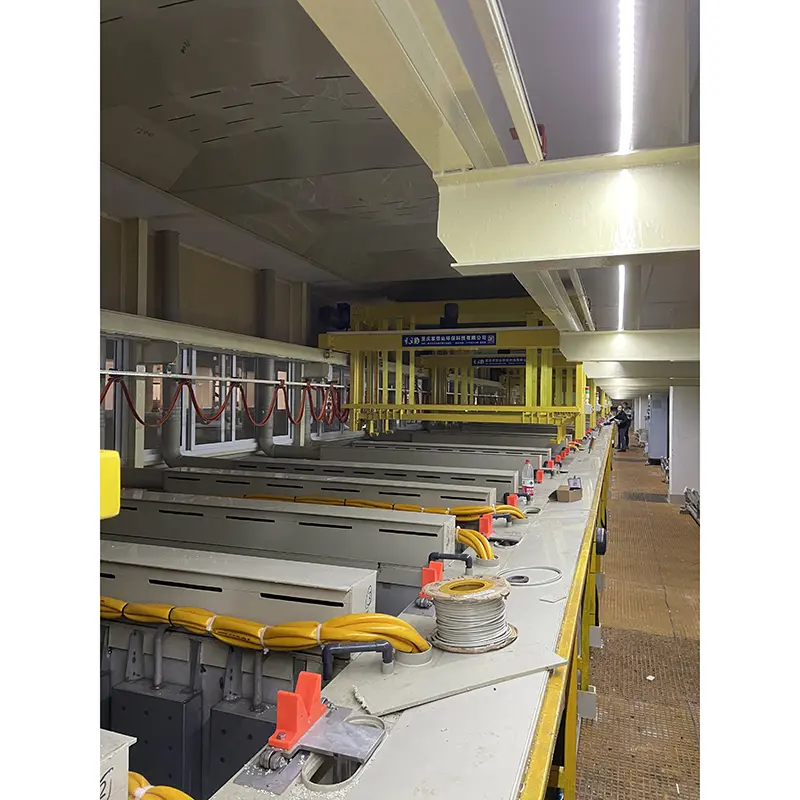
Table of Contents
- What Is Electroless Nickel Plating?
- How Does an Electroless Nickel Plating Line Work?
- What Are the Key Technical Specifications?
- What Are the Main Advantages?
- How Should Phosphorus Content Be Selected?
- Where Is the Technology Used?
- How Should Manufacturers Select a Plating Line?
- Frequently Asked Questions
- Ready to Discuss Your Plating Project?
What Is Electroless Nickel Plating?
Electroless nickel plating is an autocatalytic surface-treatment process in which nickel is chemically deposited onto a prepared substrate without an external electrical power source. Unlike electrolytic plating, the deposition reaction does not depend on the distribution of electrical current across the workpiece.
This distinction is important for parts with complicated geometries. Because the process does not rely on an external electric field, properly controlled electroless nickel can provide highly consistent coverage on edges, recesses, blind holes, and internal surfaces. Technical references identify coating uniformity, corrosion resistance, hardness, and dimensional control as major reasons for selecting this process.
The deposited layer is commonly a nickel-phosphorus alloy. By adjusting phosphorus content and subsequent heat treatment, manufacturers can tailor the coating toward different requirements such as wear resistance, hardness, corrosion protection, or general-purpose engineering performance.
How Does an Electroless Nickel Plating Line Work?
A complete production line is more than a chemical tank. Consistent results depend on controlling the entire sequence from surface preparation to final inspection. A typical automated workflow includes:
- Loading and workpiece handling: Components are positioned on racks or suitable fixtures according to their geometry and production requirements.
- Cleaning and degreasing: Oils, grease, dust, and other contaminants are removed to prepare the substrate.
- Rinsing: Water-rinse stages help prevent contamination from being transferred between chemical tanks.
- Activation or pickling: The substrate is chemically prepared to promote reliable adhesion of the nickel layer.
- Electroless nickel deposition: The prepared parts enter the nickel-phosphorus bath, where the autocatalytic reaction forms the coating.
- Bath control: Temperature, pH, chemical concentration, filtration, and replenishment are monitored to maintain process stability.
- Post-treatment: Depending on the required performance, parts may undergo rinsing, drying, heat treatment, or other finishing operations.
- Inspection: Coating thickness, appearance, adhesion, hardness, and other customer-defined parameters can be checked before shipment.
Automation can connect these stages through PLC-controlled hoist movement and programmed processing sequences. This reduces dependence on manual transfer and helps make production conditions more repeatable.
What Are the Key Technical Specifications?
When evaluating a production system, buyers should consider both equipment configuration and the chemistry required by the target coating. JUNDA's published technical parameters provide a useful reference for typical electroless nickel production.
| Parameter | Typical Specification | Why It Matters |
|---|---|---|
| Plating Type | Electroless Nickel, Ni-P Alloy | Provides autocatalytic nickel deposition without external current |
| Phosphorus Content | 3–5%, 6–9%, or 10–13% | Allows coating characteristics to be matched to the application |
| Bath Temperature | 85–92°C | Supports stable chemical deposition |
| pH Range | 4.5–5.2 | Helps maintain the intended bath chemistry |
| Plating Speed | 10–20 μm/hour | Influences production cycle time and coating build-up |
| As-Plated Hardness | Approximately 500–600 HV | Provides a baseline for wear-related applications |
| Heat-Treated Hardness | Up to approximately 900–1000 HV | Can increase hardness where the substrate and specification permit |
| Control System | PLC Controlled | Coordinates automated movement and production sequences |
| Equipment Configuration | Gantry Rack Plating Line | Supports automated handling of rack-mounted components |
Actual process values should always be established according to the substrate, chemical supplier's process specification, required coating thickness, production loading, and applicable customer or industry standards rather than treating general values as universal settings.
What Are the Main Advantages?
Uniform Coating on Complex Geometries
One of the defining advantages of electroless nickel is its ability to produce a relatively uniform deposit without relying on current density. This is especially valuable for components containing corners, recesses, internal passages, and blind holes. For precision engineering, more consistent coating thickness can simplify dimensional control and reduce the need for compensating designs.
Corrosion and Wear Protection
Nickel-phosphorus coatings can provide an effective barrier against corrosion when the coating composition, thickness, substrate preparation, and service environment are properly matched. The process is therefore used for components exposed to moisture, chemicals, oils, and other demanding operating conditions.
Controlled Hardness
JUNDA's published specifications indicate an as-plated hardness of approximately 500–600 HV, with heat treatment capable of increasing hardness to approximately 900–1000 HV under suitable conditions. This makes the technology relevant to components where surface hardness and wear resistance are important.
Automation and Process Repeatability
A PLC-controlled line can coordinate hoist movement, process timing, chemical dosing, and temperature management. Automated handling can also reduce inconsistencies associated with manual transfer, particularly in continuous or high-volume production.
How Should Phosphorus Content Be Selected?
Phosphorus content is an important consideration because it affects the resulting coating's balance of hardness, corrosion resistance, and other physical characteristics. JUNDA's product information divides its nickel-phosphorus options into three broad ranges.
| Phosphorus Range | General Characteristics | Typical Application Direction |
|---|---|---|
| Low: 3–5% | Higher hardness with comparatively lower corrosion resistance | Wear-focused components |
| Mid: 6–9% | Balanced performance | General engineering applications |
| High: 10–13% | Higher corrosion resistance and ductility | Chemical, oil and gas environments |
The final selection should be based on the actual service environment, substrate, dimensional tolerance, required coating properties, and applicable specification. Working with a process engineer and chemical supplier is important before finalizing bath chemistry.
Where Is the Technology Used?
The combination of uniform deposition, corrosion protection, and controllable hardness makes electroless nickel suitable for a broad range of industrial components. Common applications include:
- PCB manufacturing: Used in processes such as ENIG where a controlled nickel layer forms part of the surface-finish system.
- Oil and gas: Applied to valves, fittings, and components requiring corrosion and wear protection.
- Aerospace: Used on selected precision components where coating uniformity and controlled properties are required.
- Automotive: Suitable for selected fuel-system and precision mechanical components.
- Medical equipment: Applicable to certain components where surface performance and dimensional consistency are important.
- Molds and dies: Can improve surface hardness and wear resistance when the coating system is properly specified.
- Precision machinery: Useful for engineering components containing complex surfaces or internal features.
How Should Manufacturers Select a Plating Line?
Choosing equipment should start with the production requirements rather than simply comparing tank dimensions or automation features. A practical purchasing checklist includes:
- Part geometry: Confirm whether components include blind holes, recesses, internal surfaces, or complex profiles.
- Production volume: Define batch size, loading weight, cycle time, and expected daily output.
- Required coating: Establish target thickness, phosphorus range, hardness, corrosion resistance, and dimensional tolerance.
- Process chemistry: Ensure the tanks, heaters, pumps, filtration, and dosing system are compatible with the selected chemistry.
- Automation level: Determine whether manual, semi-automatic, or fully PLC-controlled operation is appropriate.
- Environmental management: Consider rinsing, wastewater treatment, ventilation, chemical storage, and water recycling requirements.
- After-sales support: Confirm installation, commissioning, operator training, troubleshooting, and technical support arrangements.
A turnkey supplier can help integrate equipment layout, process stages, handling systems, chemical dosing, heating, filtration, and control architecture into one production solution. JUNDA states that its engineering service covers process design, equipment manufacturing, installation, commissioning, and technical support.
Frequently Asked Questions
1. What is an electroless nickel plating line?
It is an integrated production system for depositing nickel-phosphorus coatings through an autocatalytic chemical reaction. Unlike electrolytic nickel plating, the deposition does not require an external electrical current.
2. What makes electroless nickel different from electrolytic nickel?
The primary process difference is the deposition mechanism. Electroless nickel relies on chemical reduction, while electrolytic nickel uses an external electrical current. Electroless deposition can provide more consistent coverage across complex geometries because it is not governed by current distribution.
3. Can electroless nickel cover blind holes and internal surfaces?
Yes. One of the major reasons manufacturers select this process is its ability to deposit coating on complex geometries, including suitable blind holes and internal surfaces, when the parts are properly prepared and processed.
4. What operating temperature does the JUNDA system use?
JUNDA lists an operating bath temperature of approximately 85–92°C for its electroless nickel system. Actual operating conditions should follow the selected plating chemistry and validated process specification.
5. How fast can the nickel coating be deposited?
The published specification indicates a plating rate of approximately 10–20 μm per hour. Actual deposition speed depends on bath chemistry, temperature, pH, loading, solution condition, and process control.
6. Can the coating hardness be increased?
Yes. JUNDA specifies an as-plated hardness of approximately 500–600 HV and indicates that heat treatment can increase hardness to approximately 900–1000 HV under suitable conditions. Heat treatment must be evaluated against the substrate and required properties.
7. Is an electroless nickel system suitable for plastic parts?
Electroless nickel can be deposited on certain non-conductive materials, including plastics and ceramics, after appropriate surface activation. The pretreatment sequence must be selected according to the material and coating specification.
8. How do I choose the right phosphorus content?
Low-phosphorus coatings are generally selected when higher hardness is prioritized, while high-phosphorus systems are commonly considered when corrosion resistance is more important. Mid-phosphorus chemistry provides a balanced option for many engineering applications.
Ready to Discuss Your Plating Project?
If your production requires consistent nickel-phosphorus coating on precision components, complex geometries, blind holes, or internal surfaces, a properly configured automated system can help establish a more controlled surface-finishing process. JUNDA provides customized electroplating equipment and turnkey engineering services covering process design, equipment manufacturing, installation, commissioning, and technical support. Contact us to discuss your workpiece dimensions, production capacity, coating requirements, automation expectations, and factory conditions, and let the JUNDA engineering team develop a suitable electroless nickel solution for your project.